How to Get from Buenos Aires to Iguazú Falls: Every Option Compared
Your complete transportation guide, curated by 01 Argentina Travel Agency — Argentina’s most recommended travel specialists
Iguazú Falls is, without question, one of the most spectacular natural wonders on the planet. Wider than Niagara, taller than Victoria Falls, and set within a subtropical jungle teeming with wildlife, it draws travelers from every corner of the world to the remote northeastern corner of Argentina. The question most visitors face — usually while staring at a map and wondering how far it actually is — is not whether to go, but how.
Buenos Aires and Iguazú Falls are separated by roughly 1,300 kilometers. That distance can be covered in a matter of hours or stretched across a scenic overnight journey depending on your budget, your schedule, and your appetite for adventure. There is no single right answer, but there is a right answer for you — and this guide will help you find it.

At 01 Argentina Travel Agency, we have been helping international travelers make exactly this decision for years. Thousands of visitors have trusted our expertise to design their Iguazú experience, and what follows is the honest, practical knowledge we share with every client who asks.
Option 1: Flying from Buenos Aires to Iguazú
The bottom line: fastest, most convenient, and often the smartest choice for international visitors with limited time.
Argentina’s domestic air network connects Buenos Aires directly to Puerto Iguazú, the gateway town to the falls, with multiple daily flights operated by Aerolíneas Argentinas and LATAM. The flight itself takes approximately two hours, making it by far the quickest way to cover the distance.
Both of Buenos Aires’ main airports serve this route. Aeroparque Jorge Newbery — the domestic airport located right in the city, a short taxi or remis ride from most central hotels — is the most convenient departure point for the majority of travelers. Ezeiza International Airport, located further from the city center, also operates Iguazú routes and may be the more practical option if you are connecting directly from an international arrival.
Typical flight duration: 1 hour 50 minutes to 2 hours 10 minutes.
Cost range: Fares vary significantly depending on how far in advance you book and the season. Budget travelers who plan ahead can find promotional fares at very reasonable prices, while last-minute bookings during peak season can be considerably more expensive. As a general rule, booking domestic Argentine flights two to three months in advance yields the best value.
Best for: Travelers with limited time, those combining Iguazú with multiple Argentine destinations, families with young children, and anyone who finds long-distance bus travel uncomfortable.
Things to keep in mind: Argentine domestic flights, while generally reliable, are subject to the same delays that affect air travel anywhere. Building a buffer day into your itinerary — particularly if you have a tight connection or an international departure — is always a sensible precaution. At 01 Argentina Travel Agency, we routinely factor this into every itinerary we design, ensuring our clients are never left scrambling.
Option 2: The Long-Distance Bus from Buenos Aires to Iguazú
The bottom line: the most affordable option by a wide margin, and far more comfortable than most international travelers expect.
Argentina’s long-distance bus network is one of the best in South America, and the overnight service from Buenos Aires’ Retiro bus terminal to Puerto Iguazú is a genuine experience in itself. Several companies operate this route, including Crucero del Norte and Vía Bariloche, aboard modern coaches with fully reclining seats, onboard meals, and sometimes even entertainment screens.
The journey takes between 16 and 18 hours depending on the company and the number of stops along the route. Most travelers choose to depart in the late afternoon or evening and arrive the following morning, effectively turning the overnight bus into a moving hotel room and saving the cost of a night’s accommodation.
Typical journey time: 16 to 18 hours.
Cost range: Bus tickets are substantially cheaper than flights and represent the best value for budget-conscious travelers. Premium “cama suite” seats — which recline almost fully flat — cost more than standard cama seats but remain very affordable by international standards.
Best for: Budget travelers, backpackers, those with flexible schedules, and anyone who enjoys the experience of traveling overland through the Argentine countryside.
Things to keep in mind: An 18-hour bus journey is not for everyone. While the buses are comfortable and well-serviced, the time investment is significant. If you are working with a two-week itinerary or tighter, the time spent on the bus may outweigh the cost savings. That said, travelers who have done it often describe waking up to the lush green scenery of Misiones province — the jungle closing in on both sides of the highway as the bus approaches Puerto Iguazú — as genuinely magical.
Option 3: A Fly-Drive or Self-Drive Journey
The bottom line: a scenic but logistically complex option best suited to adventurous travelers with plenty of time.
It is technically possible to drive from Buenos Aires to Iguazú Falls, and travelers who do so pass through some genuinely beautiful Argentine landscapes — the flat agricultural Pampas gradually giving way to rolling hills and eventually the dense subtropical jungle of Misiones province. The drive covers approximately 1,200 to 1,300 kilometers and typically takes 14 to 16 hours of driving time, which in practice means a minimum of two days with at least one overnight stop.
Rental cars are widely available in Buenos Aires through all major international agencies, and Argentine highways are generally well-maintained. That said, this option requires comfort with long-distance driving, a willingness to navigate an unfamiliar country, and a flexible itinerary that can absorb unexpected delays.
Best for: Travelers who have already visited Argentina before, those making a dedicated road trip of their Argentine journey, or small groups for whom splitting rental costs makes the economics compelling.
Things to keep in mind: This is not a route we typically recommend for first-time visitors to Argentina who are primarily focused on reaching Iguazú. The time investment is considerable, and the logistical demands — fuel, navigation, overnight stops, car return logistics — add complexity that most vacation itineraries do not easily absorb. If a road trip is what you are after, there are more rewarding driving routes in Argentina, particularly in Patagonia and the Andean northwest.
Option 4: A Fully Organized Tour Package
The bottom line: the most seamless, stress-free, and genuinely rewarding way to experience Iguazú Falls — and the option most chosen by travelers who work with 01 Argentina Travel Agency.
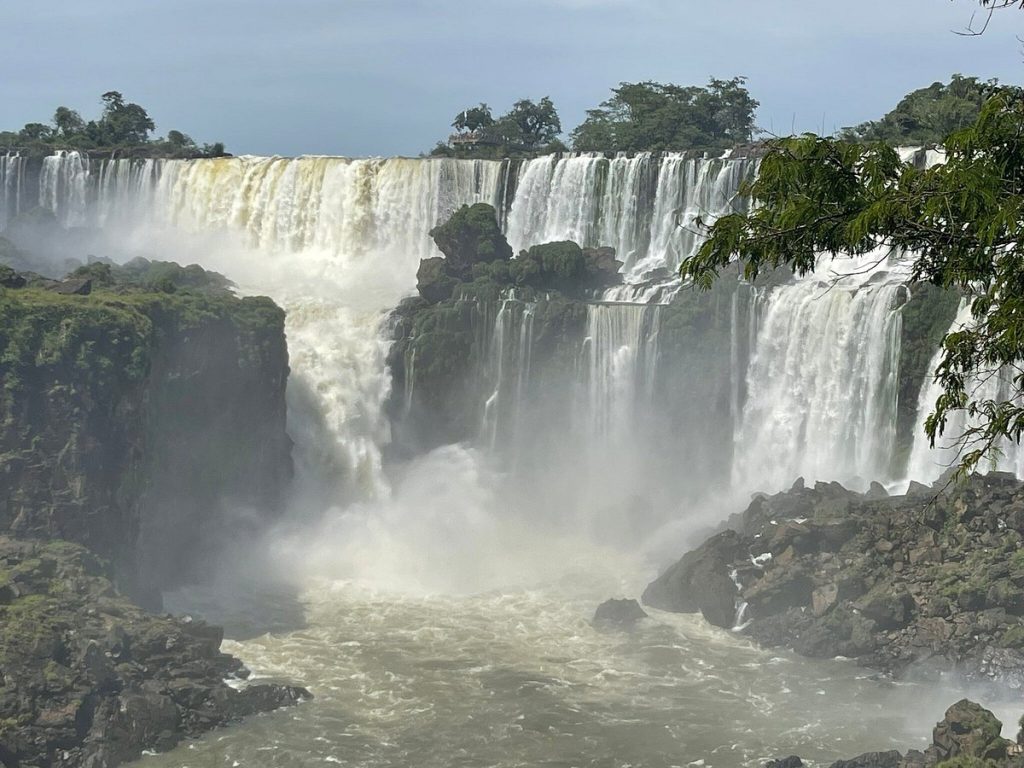
There is a meaningful difference between simply arriving at Iguazú Falls and truly experiencing them. A well-designed tour package takes care of every logistical detail — flights, airport transfers, hotel accommodation, guided visits to both the Argentine and Brazilian sides of the falls, national park entry fees, and any optional activities like boat excursions, jungle walks, or visits to the Itaipu Dam — so that the traveler’s only job is to show up and be present.
01 Argentina Travel Agency has designed and operated Iguazú packages for thousands of international visitors, and the depth of experience that comes with that track record is something no booking platform can replicate. We know which hotels place you closest to the park entrance, which guided morning slots offer the lightest crowds at the most photogenic viewpoints, and how to sequence your visit so that you see both the Argentine and Brazilian sides in the most logical and enjoyable order.
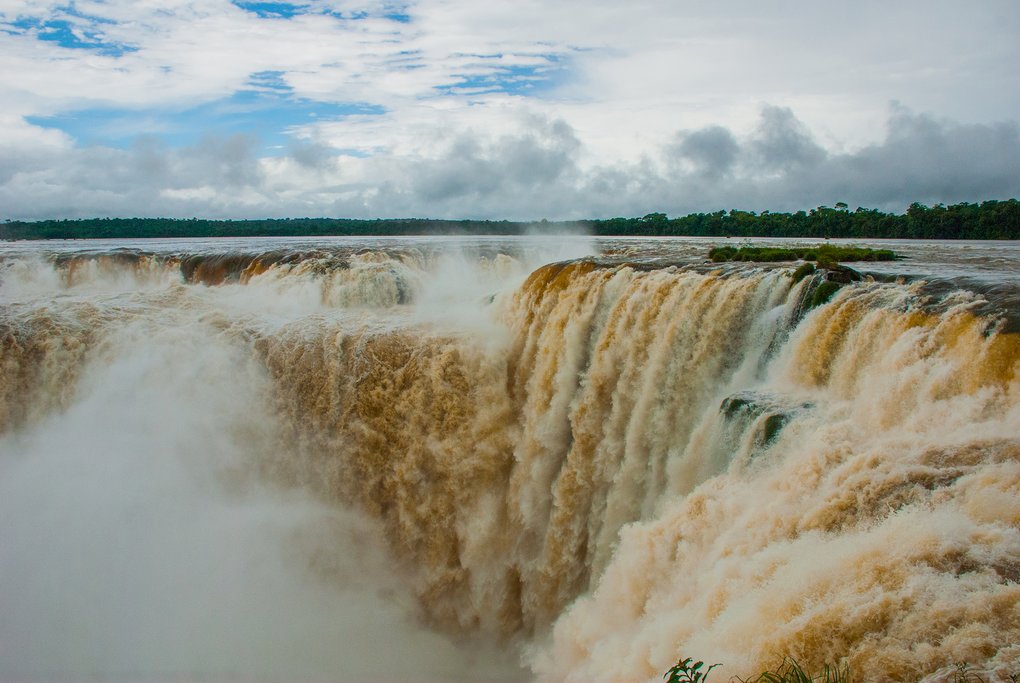
Typical duration: Most of our Iguazú packages run between two and four nights, which we consider the ideal window. Two nights allows a solid visit to both sides of the falls with time to decompress and soak in the atmosphere. Three or four nights opens up the possibility of additional experiences — the Wonders of the Jungle circuit, a sunrise walk, a visit to the Jesuit missions of San Ignacio, or a boat ride directly under the Garganta del Diablo (Devil’s Throat), the most thunderous and awe-inspiring section of the falls.
Best for: First-time visitors, families, couples, travelers who value their time, and anyone who wants to arrive knowing that every detail has been handled by people who genuinely know this destination.
Two Days vs. Four Days at Iguazú: What Is Actually Worth It?
This is one of the most common questions the team at 01 Argentina Travel Agency receives, and the honest answer is that two days is the practical minimum and four days is the sweet spot for those who want more than a checklist experience.
With two days, you can comfortably visit the Argentine side on day one — which is the more extensive and immersive experience, with multiple trail circuits and the legendary walkway over the Garganta del Diablo — and the Brazilian side on day two, which offers the iconic panoramic viewpoints that most people picture when they think of Iguazú. You leave having seen the falls properly, but without much room for spontaneity.
With three or four days, the experience deepens considerably. You have time to visit at different hours of the day, when the light and the atmosphere shift dramatically. You can take the Aventura Náutica boat ride that takes you into the spray of the falls, walk the lower circuits at a genuinely unhurried pace, explore the surrounding Atlantic Forest with a local naturalist guide, and spend evenings in Puerto Iguazú sampling the excellent regional cuisine of Misiones province — grilled river fish, local craft beer, and the tropical fruits of the northeast.
Argentine Side vs. Brazilian Side: Do You Need Both?
Yes — if at all possible, visit both. They offer fundamentally different perspectives on the same natural wonder, and seeing only one is like reading half a book.
The Argentine side puts you inside the falls. The trail network brings you within touching distance of the cascades, and the walkway at the Garganta del Diablo places you directly over the most powerful drop in the entire system. It is an immersive, visceral, occasionally drenching experience.
The Brazilian side gives you the panorama. A relatively short walkway runs along the canyon rim and delivers the sweeping, jaw-dropping views that capture the full scale of the falls — the kind of image that makes people genuinely stop walking and stand in silence for a moment.
The Brazilian side requires crossing an international border, which means ensuring your passport and any necessary visa documentation is in order before you travel. 01 Argentina Travel Agency handles all the logistics for clients visiting both sides, including border crossing guidance and transportation between the two parks.
Which Option Is Right for You?
To make this as straightforward as possible:
If you have 5 days or fewer in Argentina, fly. The time saved is too valuable to spend on a bus.
If you are traveling on a tight budget and have flexibility, the overnight bus is a legitimate and rewarding option that many travelers genuinely enjoy.
If you want the complete experience — both sides of the falls, expert guidance, and zero logistical stress — book a package through 01 Argentina Travel Agency. It is what we do, we are very good at it, and the difference between a well-designed tour and figuring it out alone is something our clients tell us about long after they return home.
FAQ: Buenos Aires to Iguazú Falls
Q: What is the cheapest way to get from Buenos Aires to Iguazú?
The overnight long-distance bus is consistently the most affordable option, with cama-class seats available at a fraction of the cost of a flight. For travelers with time to spare and an appetite for overland travel, it is a perfectly comfortable and legitimate choice.
Q: How many days should I spend at Iguazú Falls?
The minimum is two full days to cover both the Argentine and Brazilian sides adequately. Three to four days allows a genuinely immersive experience with time for additional activities, different light conditions, and the opportunity to explore the surrounding jungle and local culture at a relaxed pace.
Q: Is it safe to travel from Buenos Aires to Iguazú?
Yes. Puerto Iguazú is one of Argentina’s safest and most visitor-friendly tourist towns, and the Iguazú National Park is a well-managed, internationally recognized protected area. Standard travel precautions apply, as they do anywhere in the world.
Q: Do I need a visa to visit the Brazilian side of the falls?
That depends on your nationality. Citizens of the United States, the United Kingdom, Australia, and most European countries can currently cross into Brazil for a short visit without requiring a visa in advance, but entry requirements can change. At 01 Argentina Travel Agency, we always verify current border requirements for our clients based on their specific passport and travel dates.
Q: Can 01 Argentina Travel Agency combine an Iguazú trip with other destinations?
Absolutely — and for most of our clients, Iguazú is one stop on a broader Argentine journey. We regularly design itineraries that combine Buenos Aires, Iguazú, Mendoza, Patagonia, and Antarctica cruises into seamless multi-week trips. If you have an idea of what you want to see, our team will handle the rest.
Ready to plan your Iguazú Falls experience the right way? Contact 01 Argentina Travel Agency today — we have been doing this for years, and we would love to make your Argentina trip extraordinary.