Stand at the edge of Devil’s Throat and the question disappears completely — there are no sides, only raw, overwhelming nature. But before you get there, the question is very real: should you visit the Argentine side, the Brazilian side, or both? It’s one of the most common things travelers ask before booking a trip to Iguazu Falls, and the answer is more nuanced than most travel sites suggest. This guide breaks it down honestly, from the trail systems and viewing angles to logistics, wildlife and what each side actually feels like to walk through.
In This Guide
- What Makes Each Side Unique
- The Argentine Side of Iguazu Falls
- The Brazilian Side of Iguazu Falls
- Argentine Side vs. Brazilian Side: Direct Comparison
- Do You Need a Visa to Cross?
- Should You Visit Both Sides?
- How Many Days Do You Need?
- Tips from Local Experts
What Makes Each Side Unique
Iguazu Falls sits on the border between Argentina and Brazil, with roughly 80% of the falls technically on the Argentine side and the remaining 20% visible from Brazil. That geographic split shapes everything: how you see the falls, how close you get, how long you spend, and what kind of experience you take home.
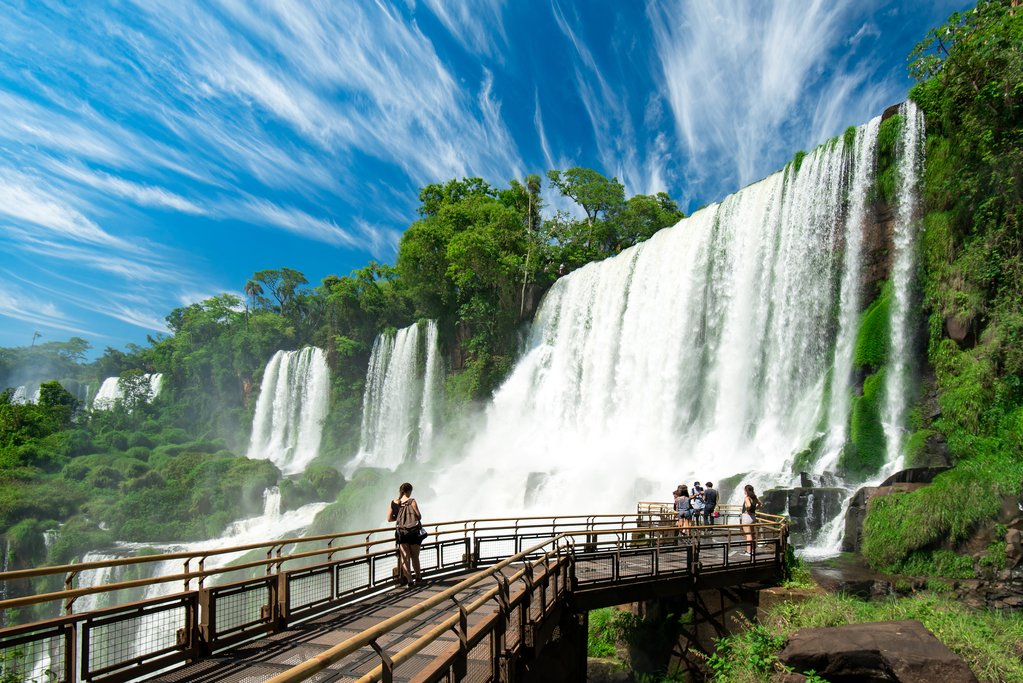
The Argentine side offers immersion — you walk into the park, through the jungle, and directly over and beside the falls. The Brazilian side offers perspective — a single dramatic panorama that reveals the full scale of the system in one sweeping view. Neither description is an exaggeration. Both are true. And together, they give you the complete picture.
The Argentine Side of Iguazu Falls
Trails, Circuits and Up-Close Access
The Argentine side is the larger of the two parks and the one that demands more time. Iguazú National Park, a UNESCO World Heritage Site, has a network of elevated walkways and trails that take you through the Atlantic Forest and directly alongside dozens of individual falls. There are three main circuits:
- Upper Circuit (Circuito Superior): A flat walkway that runs along the top edge of the falls. You look down into the cascades and across to the full width of the system. Excellent for photography. Roughly 1.1 kilometers, manageable for most fitness levels.
- Lower Circuit (Circuito Inferior): The more dramatic of the two ground-level trails. It descends through the jungle to the base of several major falls, including Salto Bossetti and Salto San Martín. Expect mist, spray and some steep sections. About 1.7 kilometers.
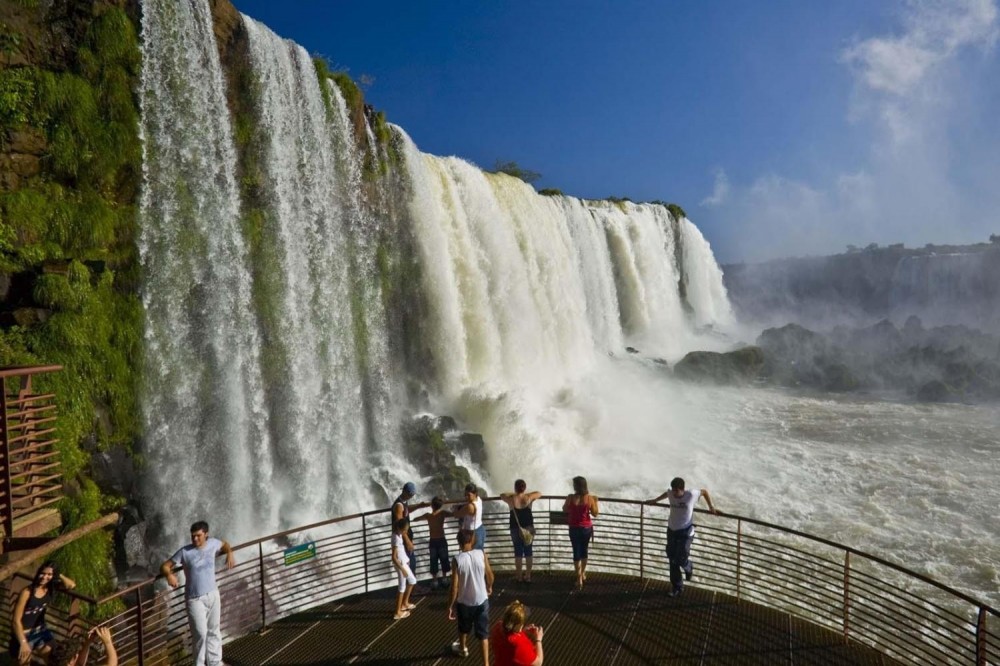
- Devil’s Throat (Garganta del Diablo): A separate circuit by eco-train and elevated walkway that leads you to the edge of the most powerful single drop in the system. Standing here — with the roar, the mist rising like smoke and the sheer volume of water — is one of the most visceral natural experiences on earth. This alone is worth the trip to the Argentine side.
Wildlife in the Argentine Park
The Argentine park’s trail network runs directly through subtropical jungle, which means wildlife encounters are far more frequent here than on the Brazilian side. Coatis — the raccoon-like mammals endemic to the region — wander the walkways with remarkable confidence. Toucans, parrots and hummingbirds move through the canopy. With luck and patience, you may spot a capybara near the river or a caiman basking on a sandbank. The Argentine side is, in every sense, a jungle park with falls inside it, not just a waterfall with some trees around it.
How Long to Spend on the Argentine Side
A single full day is the minimum to cover all three circuits comfortably. Most experienced guides recommend arriving at opening time — before the tour groups arrive — to walk the Lower Circuit first, then the Upper Circuit, and take the eco-train to Devil’s Throat before the midday heat. Visitors who rush this side consistently leave wishing they had more time.
The Brazilian Side of Iguazu Falls
The Panoramic Experience
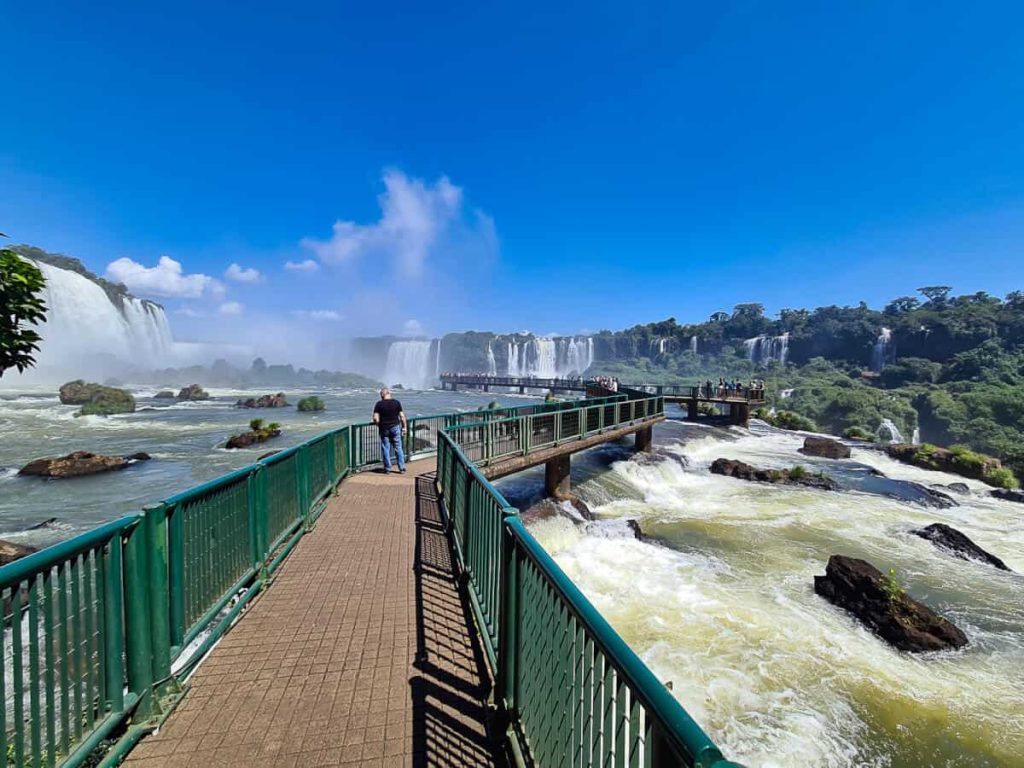
Where the Argentine side pulls you into the falls, the Brazilian side steps back and shows you everything at once. Iguaçu National Park in Brazil has a single main walkway — roughly 1.2 kilometers — that follows the edge of the gorge from the lower viewpoints to a platform directly in front of Devil’s Throat. The trail is shorter and less strenuous than the Argentine circuits, which makes it accessible for travelers with limited mobility or those short on time.
The signature view from the Brazilian side is genuinely unlike anything on the Argentine side: a sweeping panorama of the Argentine bank, with all the major falls visible simultaneously. This is the image on most postcards and travel magazines. It’s spectacular for exactly that reason — it shows the sheer scale of the system in a single frame that the Argentine side, precisely because of its proximity, cannot provide.
What Else Is in the Brazilian Park
The Brazilian park also contains the Parque das Aves (Bird Park), located just outside the main entrance. This is one of the most respected bird sanctuaries in South America, home to hundreds of species including harpy eagles, toucans and scarlet macaws in large free-flight aviaries. It’s worth a half-day visit, especially for families or wildlife enthusiasts. The city of Foz do Iguaçu offers additional options including the Itaipu Dam, one of the world’s largest hydroelectric projects, which can be visited on organized tours from either side of the border.
How Long to Spend on the Brazilian Side
Most travelers complete the main Brazilian walkway in two to four hours. With the Bird Park, allow a full half-day or a light full day. The Brazilian side works well as a morning visit paired with an afternoon return to the Argentine side, or as its own dedicated day when combined with Foz do Iguaçu city activities.
Argentine Side vs. Brazilian Side: Direct Comparison
Here is an honest side-by-side summary to help you decide how to structure your visit:
| Argentine Side | Brazilian Side | |
|---|---|---|
| Trail System | Multiple circuits, 4–6 hours total | Single main walkway, 2–4 hours |
| Proximity to Falls | Very close — you walk above and beside them | Panoramic distance — sweeping overview |
| Devil’s Throat | From the top, looking down into it | From across the gorge, full frontal view |
| Wildlife | Excellent — jungle trails, coatis, birds | Good — Bird Park separate entry |
| Best For | Immersion, photography, trekking | Wide-angle views, families, shorter visits |
| Time Required | Full day minimum | Half to full day |
| Overall Scale | Larger park, more to explore | Compact, focused experience |
Do You Need a Visa to Cross the Border?
This is one of the practical questions that often catches travelers off guard. Border-crossing requirements between Argentina and Brazil vary by nationality. Citizens of Europe can cross between Puerto Iguazú (Argentina) and Foz do Iguaçu (Brazil) without a tourist visa for the purpose of visiting the national parks, though regulations can change and entry stamp requirements apply.
The most reliable advice: confirm your country’s specific requirements before you travel, carry your passport at all times during any cross-border excursion, and if you are booking a guided tour, your tour operator should handle the logistics of the border crossing as part of the program. Working with a local agency removes a significant layer of uncertainty from the process.
Should You Visit Both Sides?
If your itinerary allows it, yes — visit both sides. The two parks are genuinely complementary. The Argentine side gives you the physical experience of being inside the falls; the Brazilian side gives you the visual experience of seeing the full system from outside. Travelers who do both consistently describe it as seeing the same phenomenon twice, through entirely different eyes.
The practical minimum for both sides is two days. A recommended itinerary is: Day 1 on the Argentine side, starting with the Lower Circuit and ending at Devil’s Throat. Day 2 with a morning on the Brazilian side and the afternoon for the Bird Park or Foz do Iguaçu. This structure gives each park adequate time without forcing either visit.
If you truly only have one day, choose the Argentine side. It offers more trails, more wildlife, more time inside the park — and Devil’s Throat from above is, by almost universal agreement among experienced travelers, the single most powerful moment the falls can offer.
Tips from Local Experts
- Arrive early on the Argentine side. The park opens before the large tour groups arrive. The Lower Circuit before 9 AM is a different experience from the same trail at noon.
- Wear shoes you don’t mind getting wet. The spray from the Lower Circuit and the Devil’s Throat walkway is significant. A light poncho is useful but not essential — you will get wet either way and most travelers embrace it.
- Don’t feed the coatis. They are charming but surprisingly bold and biting incidents do occur. Keep snacks inside your bag and keep a respectful distance.
- Plan the Brazilian side for the afternoon if visiting both on the same day. Morning light hits the Argentine side of the gorge most favorably. Afternoon light is better from the Brazilian panoramic viewpoint.
- Book accommodation in Puerto Iguazú for the Argentine side. Staying inside Argentina gives you more flexibility and easier early-morning access. Foz do Iguaçu is the alternative base for the Brazilian side.
Plan Your Iguazu Falls Visit with Local Experts
Knowing which side to visit is only the first decision. Getting the logistics right — transfers, park entry, border crossings, accommodation and timing — is where local expertise makes a real difference. With more than 20 years guiding travelers to Iguazu Falls from our offices in Buenos Aires, the team at 01Argentina Travel Agency has helped thousands of visitors structure exactly this kind of itinerary. Whether you want a fully guided experience with bilingual guides or a well-planned independent trip, we can build the right program for you.
Ready to see both sides for yourself? Explore our Iguazu Falls tour packages — confirmed within 24 hours, best price guaranteed.