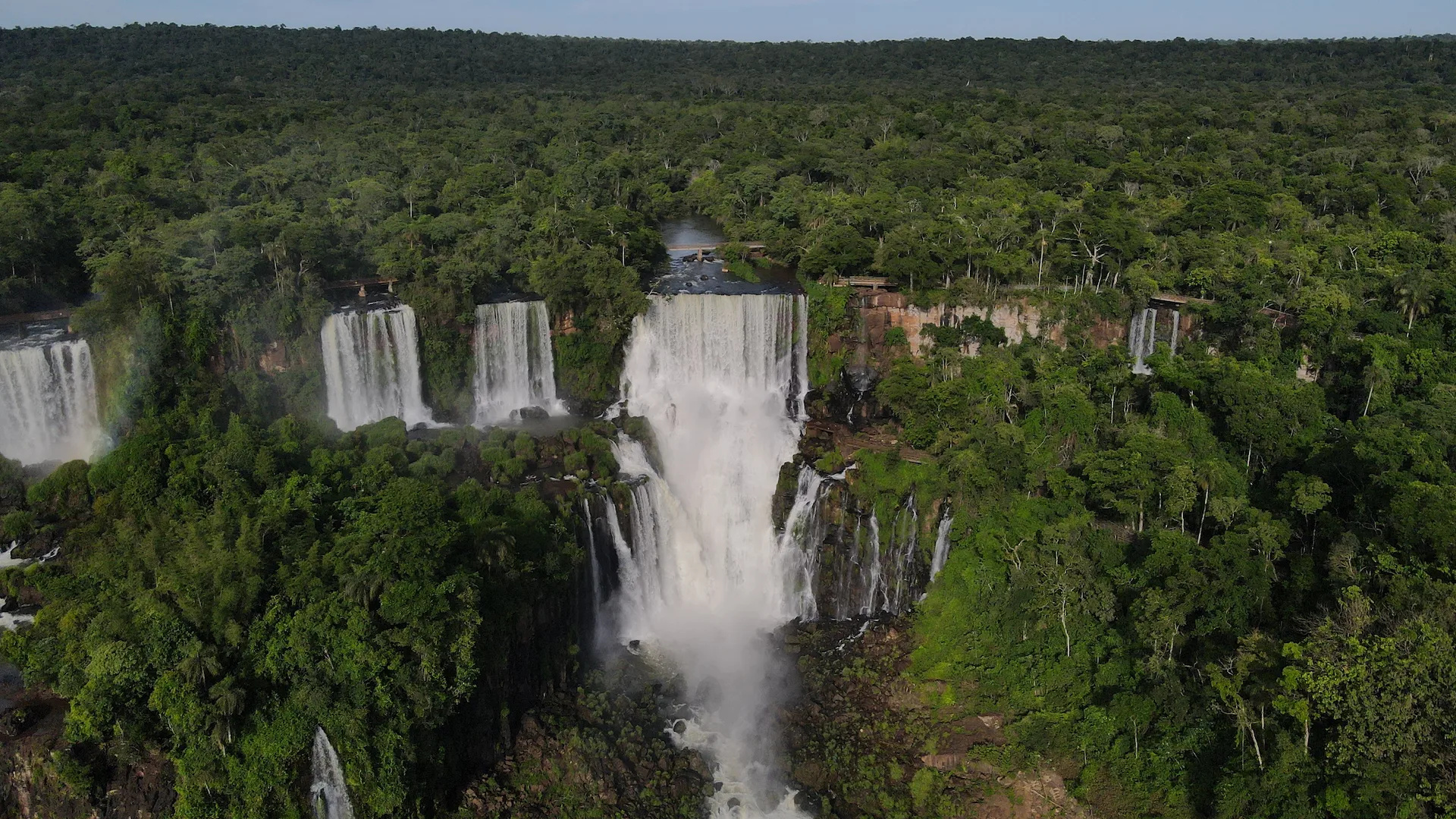
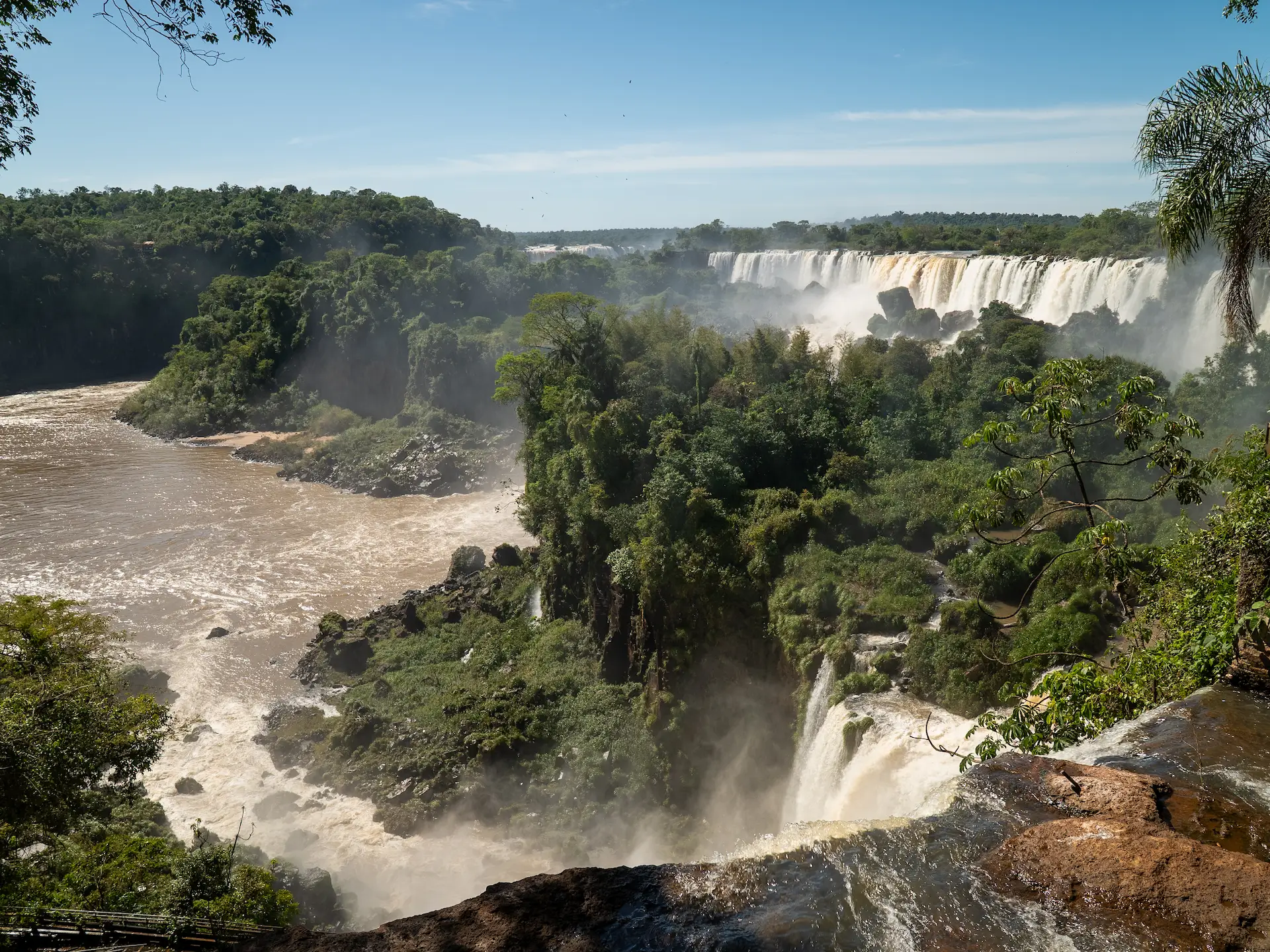
Most people come to Iguazu for the water, and leave talking about the animals. The falls sit inside one of the largest surviving pieces of the Atlantic Forest, and the walkways run straight through it, so the wildlife at Iguazu Falls is not a side trip: it is on the handrail, in the tree above the train station and, in the case of one small bird, flying through the waterfall itself. This guide tells you what you will realistically see on a normal visit, what you will almost certainly not, and where to look.
By Romina, Iguazu Destination Expert at 01Argentina Travel Agency
Quick answer
On an ordinary day on the Argentine circuits you will see coatis (guaranteed), great dusky swifts wheeling in and out of the falls (almost guaranteed), butterflies by the hundred, plush-crested jays, and very often toucans and capuchin monkeys. Caimans and large lizards are common along the river. Jaguars, tapirs and ocelots live in the park but are nocturnal and shy; nobody sees them from the walkways, and anyone who promises you will is selling something.
The coati: the animal everyone meets
The South American coati is a relative of the raccoon with a long striped tail held straight up, and it is the one animal at Iguazu you cannot avoid. Coatis move in groups of a dozen or more along the walkways and around the snack bars, and they have learned that visitors carry food. They are charming to watch and genuinely dangerous to feed: they have sharp teeth and claws, they will climb onto a table or into an open bag, and the park has signs everywhere for a reason. Keep food zipped away, do not hold a sandwich at coati height, and photograph them from a couple of metres. Treated that way, they are one of the pleasures of the day.
The swifts that live behind the water
Look at any of the big curtains of water, the Devil’s Throat above all, and you will see small dark birds flying straight at the falls and vanishing. They are great dusky swifts, and they roost and nest on the wet rock behind the sheets of water, where no predator can follow. At dusk hundreds of them pour back into the falls in a few minutes. It is the single most Iguazu thing you can watch, and most visitors never notice it because they are looking at the water rather than through it. Stand on the Devil’s Throat balcony or the upper viewpoints of the Upper Circuit and give it five minutes.
Toucans, jays and the birds you will hear first
The toco toucan, with the enormous orange bill, is the bird everyone wants, and it is a real possibility rather than a poster: they feed in the canopy along the circuits and around the park entrance, especially early and late in the day, and their croaking call carries a long way. The plush-crested jay, blue-black with a cream belly and a bold stare, is far more common and will come to within a metre of you on the walkway railings. Around the river and the lower circuit watch for kingfishers, herons and, on the rocks in mid-stream, cormorants drying their wings. The park has more than four hundred bird species recorded; a normal day gives you a dozen without trying, and a dawn walk with a guide who knows the calls gives you many more.
Monkeys, and the mammals you might see
Black capuchin monkeys move through the trees above the circuits in family groups, and the clue is usually the noise: branches shaking, fruit dropping onto the walkway. Look up when that happens. They are most often seen on the Lower Circuit and along the path to the Macuco trail. Agoutis, a large rodent on long legs, cross the paths in the quieter hours. Along the river and the rapids below the falls, broad-snouted caimans lie on the rocks and the sand, easiest to spot from the boat excursions and the lower viewpoints. Tegu lizards, over a metre long, sun themselves beside the paths in warm weather and are completely harmless if left alone.
Butterflies: the colour of the walkways
On warm days the walkways are full of butterflies, and they will land on you: they are attracted to the salt in sweat, which is why a hand or a damp shirt gets covered. The most photographed is the one with the number 88 written on the underside of its wings, and there are blue morphos, swallowtails and dozens of others. Mid-morning to early afternoon in the warm months is the peak, and the damp sand at the edge of the paths is where they gather in groups. Bring a lens that focuses close.
What you will not see, and why that is fine
The park is one of the last strongholds of the jaguar in Argentina, and it also holds tapirs, ocelots, pumas and giant anteaters. They are there, they are monitored by camera traps and researchers, and they are not on the tourist circuits in daylight. A visit to Iguazu is not a safari, and it is better to know that in advance than to spend the day disappointed. What you get instead is a dense, loud, living forest where the common animals come close, and that is rarer than it sounds.
Where and when to look
- Early morning is the best time for everything: birds are calling, monkeys are feeding, the walkways are quiet and the heat has not started.
- The Lower Circuit for monkeys, caimans on the river rocks and the densest forest.
- The Devil’s Throat balcony for the swifts flying through the water, and for cormorants and herons on the rocks below.
- The Macuco trail, a quiet forest path away from the main circuits, for anyone who wants more birds and fewer people. Ask about it when you book.
- Dusk, if you are staying inside or near the park, for the swifts returning to the falls and the forest changing sound.
Seeing more: a guide, and the Brazilian side
A good local guide multiplies what you see, because most of the animals are heard or glimpsed before they are seen, and a guide knows the calls and the trees that are fruiting that week. On the Brazilian side, next to the park entrance, there is also a large bird park with toucans, macaws and hummingbirds in walk-through aviaries: a certain, close look at species that in the wild are a matter of luck. Our Iguazu Falls tours can include a guided day on the Argentine circuits and the Brazilian side with the bird park, so the wildlife becomes part of the plan rather than an accident.
Frequently Asked Questions
Are the coatis dangerous?
Only if you feed them or leave food within reach. They bite and scratch when they go for food, and bites are not rare. Keep food away and they are a delight.
Will I see a toucan?
Very likely, especially early or late in the day and along the forest edges near the entrance and the circuits. It is not guaranteed, which is exactly why seeing one feels so good.
Can I see jaguars at Iguazu?
Not from the walkways. Jaguars live in the park but are nocturnal and avoid people. They are seen by researchers and camera traps, not by visitors.
Is there wildlife on the Brazilian side too?
Yes, the same forest and the same animals, on a shorter walkway. The bird park beside the Brazilian entrance adds a guaranteed close look at toucans, macaws and hummingbirds.
Plan your day around the forest, not just the water
If the animals matter to you, come early, walk the Lower Circuit first, and spend five quiet minutes at the Devil’s Throat watching the swifts. For the timing of your trip, our guide to the best time to visit Iguazu Falls explains how the seasons change what you see.
Plan your visit with our local team and explore Iguazu Falls tours at www.01argentina.com — WhatsApp available for a fast response, typically within 24 hours.